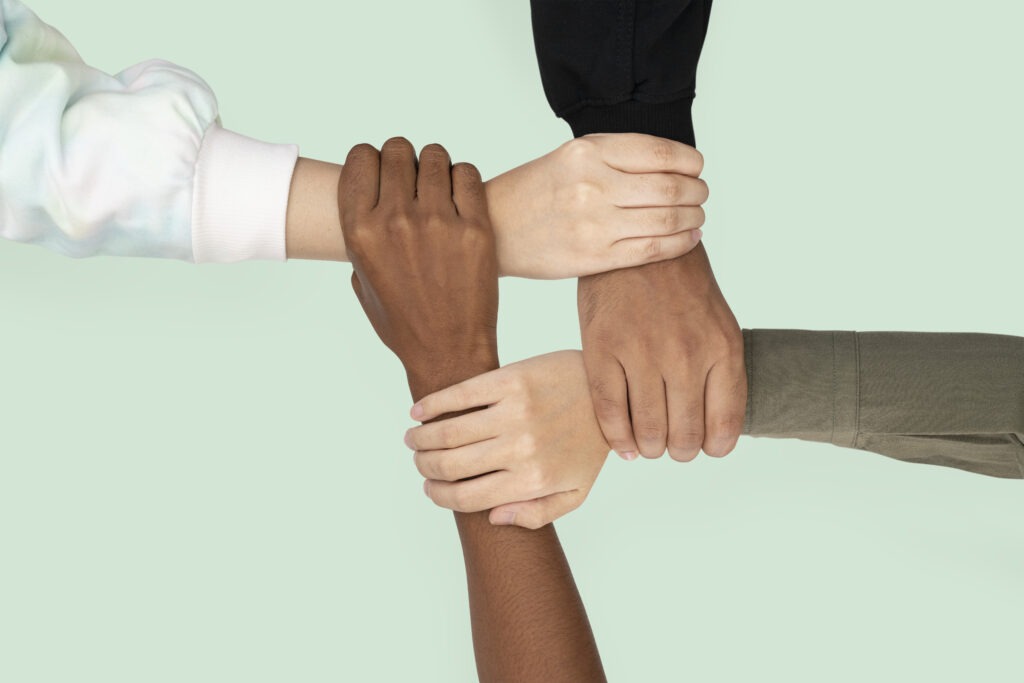
The Africa Centre has joined forces with two leading African organisations to play its part in advancing sexual and gender health education as a critical prerequisite to inclusive health management. Whereas the collaboration with the African Institute for Sexual and Gender Health (AISGH) will focus on sexual health-related matters, the partnership with the Students and Youth Working on Reproductive Health Action Team (SAYWHAT) will have a wider focus on championing youth health education rights in general, including sexual and reproductive health.
Health equity demands proper sexual and gender health education
Whereas sexual and gender health has not been a key aspect of the Africa Centre’s work to date, shifts and trends in sexual behaviour and health outcomes close to home have made it essential as a strategic focus area. The centre’s director, Dr Munya Saruchera, pointed out that a lack of sexual health education among local university students – as part of their formal education and at home – is encouraging students to experiment with sex and substances, to the detriment of their overall and mental health and wellbeing. On a broader level, society is rife with evidence of the glaring gap in sexual health education and awareness: gender-based violence, femicide, rape culture, harmful cultural practices, homophobia – the list goes on.
The dedicated work of AISGH and SAYWHAT in promoting sexual and gender health education – among high-level stakeholders via AISGH and among youth specifically via SAYWHAT – is therefore vital. “Together they add immense value to the Africa Centre’s inclusive health agenda and work, given the centrality of sexual reproductive health to broader health and wellbeing, and more specifically HIV/Aids management,” Saruchera said.
The issue’s complexity adds to the urgency, with a diverse range of constraints contributing to the overall lack of – and misinformation about – sexual and gender health education, according to Saruchera: “Children, youth and young adults are overexposed to media that glamourise sex, socialising them with inaccurate information. Families are not spending as much time together and extended family members are no longer as readily available to teach, correct and mentor as before. Church ministers and educators are often overburdened, underresourced and at times ill-equipped to teach children and youth about sexual and gender health.” If these constraints are not addressed, the harmful cultural practices and beliefs and overall societal breakdown will continue.
Empowering the next generation of health professionals
The Africa Centre’s four-year partnership with the AISGH is built on a collective commitment to empower and educate future generations of healthcare providers and managers on sexual and gender health as a vital component of wellbeing on both an individual and community level. The AISGH is dedicated to promoting sexual and gender health education, research and awareness through collaborative efforts among universities, healthcare professionals and communities across Africa. It is the official implementing partner of the World Association for Sexual Health (WAS) and works alongside groups like Sexual Health Africa (SHA) and the Southern African Sexual Health Association (SASHA).
At the heart of the collaboration is the vision to integrate sexual and gender health education seamlessly into health, management, social sciences and arts curricula to increase access to scientific, rights-based, evidence-led, culturally sensitive, socially just, equitable and inclusive sexual health education.
On a practical level, the collaboration’s objectives will involve the following:
- Undertake joint teaching and learning, curriculum/short course development and community engagement activities on wellbeing, sexual, gender and community health.
- Train and equip sexual healthcare providers, managers and youth to provide evidence-based, stigma-free and inclusive care.
- Conduct multidisciplinary research on sexual and gender health issues to establish a deeper understanding of the factors influencing these fields in Africa.
- Engage and empower professionals, youth and community groups through accredited skills training, short course development and mentorship.
- Undertake public outreach, advocacy and lobbying of policy and practice that challenges societal norms, beliefs and practices relating to sexual and gender health (which often translate into discrimination and inequality) and to address structural barriers in sexual and gender health.
- Facilitate learning and research events, including the 2027 WAS conference in Africa.
- Disseminate knowledge through publications, academic articles and community-led reporting.
- Mobilise resources in support of research and community training projects.
As part of the partnership, a Postgraduate Diploma in Sexual and Gender Health will be developed and presented across various SU faculties, utilising the specialist expertise and strategic network of the AISGH and the Africa Centre’s academic and research rigour and infrastructure. Whereas students from the Faculty of Medicine and Health Sciences (FMHS) currently have access to a similar course, Saruchera pointed out that the lack of sexual and gender health education and awareness among these future health professionals is evident. He has facilitated positive masculinity dialogues with FMHS students for the past two years and, based on his experience, “some hold views that are at best shocking and dangerous for the society they live in”. There is therefore huge potential for transforming sexual health education and awareness among students and the next generation of health professionals.
Dr Elna Rudolph, director of the AISGH (as well as SHA and SASHA) shares in the high expectations. “[This collaboration] has great potential and I look forward to working with [the Africa Centre team] to realise it.”
It’s never too early to start
Considering that approximately 25% of teenage girls in Eastern and Southern Africa give birth before 18, education on sexual and gender health on the continent cannot be left for adulthood. That is where SAYWHAT plays a critical role. Since 2023, SAYWHAT, which is based in Zimbabwe, has been championing the health and education rights of children, teenagers, students and youth. Sexual and reproductive health and rights is the foundation of their work – it acknowledges the importance of equipping young people with the knowledge and skills to make informed decisions about their sexual health and to protect themselves from risks such as STIs, HIV/Aids and unplanned pregnancies. Public health, education and child protection are the other three strategic pillars of SAYWHAT’s work.
The four-year partnership between the Africa Centre and SAYWHAT creates an opportunity to influence and advocate for youth in Southern Africa and beyond via policy formulation, evidence generation and capacity building. Whereas the Africa Centre contributes access to academic expertise and programmes, fellowships and research infrastructure, SAYWHAT provides links to community-led networks, advocacy expertise and global partnerships.
The partnership’s joint activities will include the following:
- Undertake research and evaluation projects on health management, HIV prevention, mental health, stigma and other youth health priorities.
- Develop and undertake research training programmes, fellowships and coding boot camps, especially among key youth populations.
- Develop advocacy strategies, produce policy briefs and facilitate advocacy initiatives to improve young people’s access to sexual and reproductive health as well as HIV prevention education and services and address structural barriers.
- Co-host international and regional events, seminars, webinars and symposia.
- Co-author outputs in scholarly and accredited journals and community platforms.
- Raise funds for grants, student bursaries and community projects.
Better together
AISGH and SAYWHAT form part of an established and growing network of Africa Centre partnerships. As Saruchera explained, for the centre to consistently contribute towards positive change in inclusive health management, it needs to continually embed itself in a range of strategic spaces and work with different organisations. “Sustainable change and development are never brought about by one entity working alone, but through strategic partnerships and collective attribution.”