Addressing a critical knowledge gap
Despite Africa accounting for nearly 60% of the global HIV/Aids burden, African-focused research only represents a small fraction of published research in global journals. The AJAID – an idea that has been more than 10 years in the making – was established to address this critical gap by providing African researchers with a dedicated, high-impact platform for publishing research that speaks directly to the unique epidemiological, social and healthcare dynamics of the African continent. By focusing on locally driven research and promoting African scholarship, the journal will play a crucial role in shaping context-specific policies, interventions and treatment strategies that address Africa’s structural inequalities, stigma challenges and resource constraints.
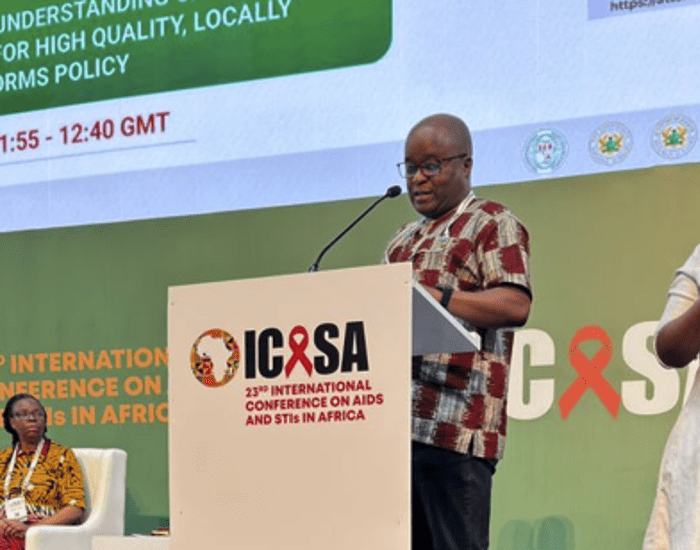
The AJAID is essentially a journal for Africa by Africa, with the aim of bridging the gaps between academia, policy and practice, providing a voice for African researchers and communities and fostering innovation to achieve an Aids-free generation. In the words of Dr Munya Saruchera, Africa Centre director and member of the editorial board: “The AJAID is more than a journal; it is a community. We are building a coalition of minds dedicated to solving Africa’s most pressing health challenges.”
At its heart, the AJAID is about storytelling and about empowering Africa to own the narrative: “We cannot have developments in our own backyards, in our communities, without it feeding into the knowledge economy. Research and publication are critical aspects of that, and it is inevitably about storytelling,” Saruchera said. “For a long time, Africa’s stories have been told by other people. Here is an opportunity for us to tell it on our own terms, in our own ways.”
On a higher level, the AJAID will also contribute to the global UN Sustainable Development Goals (SDGs): good health and wellbeing (SDG3) by publishing research that improves HIV/Aids prevention, treatment and care, reduced inequalities (SDG10) by amplifying African voices and focusing on marginalised populations and partnerships for the goals (SDG17) by providing a hub for knowledge exchange and collaboration.
Prioritising local contexts and diversity
To ensure that the AJAID remains grounded in and responsive to local contexts and priorities, the committee and the editorial board comprise experts from across the continent, including Burkina Faso, Cameroon, Congo, Côte d’Ivoire, the DRC, Ethiopia, Kenya, Nigeria, South Africa, Tunisia and Uganda. Prof Nicaise Ndembi from the DRC will serve as the editor-in-chief, supported by Prof Morenike Ukpong from Nigeria and Prof Mohomed Chakroun from Tunisia as associate editors.
To accommodate a possible influx of manuscripts, the board will be supported by SAA members who are prominent African researchers, with more than 50 peer reviewers already lined up.
Research that is relevant to everyone, submitted by anyone
The launch event was followed by a media conference. This not only provided the media with the opportunity to gain a better understanding of the journal’s objectives; it also enabled AJAID representatives to highlight the important role journalists have to play in doing research translation and newsification, to showcase research relevance and tell the story. “Bringing the human-interest angle to every publication that is going to come out of this journal is vital,” Saruchera explained. “What does [the research] have to do with us as Africans? What does [it] have to do with our community? We should let the research find its way into everyday news bulletins, community newspapers and community radios.”
According to Luc Bodea, ICASA director and SAA coordinator, opening the minds of people is crucial to making progress in overcoming HIV/Aids, and knowledge-sharing is a fundamental part of this. “Malaria kills more people than HIV now. There is no reason to discriminate. We need to let people know that discrimination cannot help us end Aids.”
The focus on accessibility ties in with the fact that anyone can submit a paper to the AJAID. “The journal is open to whoever has a story to tell,” Ukpong said. Authors should of course follow the structure of a typical research journal article – and the AJAID is there to provide support. The journal has developed a standard structure to guide authors and presented an abstract writing mentorship programme earlier this year to encourage young and emerging researchers to submit abstracts. Saruchera played a key role in conceptualising the mentoring programme.
By providing an accessible, Africa-focused platform and leveraging networks like the biennial ICASA conference, the AJAID is expected to play a transformative role in addressing critical knowledge gaps and helping to foster evidence-based solutions tailored to Africa.
Interested in submitting a paper to the AJAID? Read the submission guidelines on the AJAID website.
The practicalities
Research methodologies
The AJAID welcomes diverse research methodologies, including quantitative, qualitative and mixed-methods research, implementation science and innovative approaches such as digital health and big data analytics.
Scholarly domains
Research and discussion will focus on six scholarly domains ─ clinical and biomedical sciences, community and indigenous knowledge, human rights and ethics, social and behavioural sciences, public health and epidemiology as well as health policy and systems.
Format
The AJAID will be published online as an open access journal for easy accessibility. Hard copies may be printed for events like ICASA.
Frequency
The initial aim will be to produce one annual publication comprising 40 to 60 high-quality original research articles.
Language
The journal will be published in English and include French abstracts.
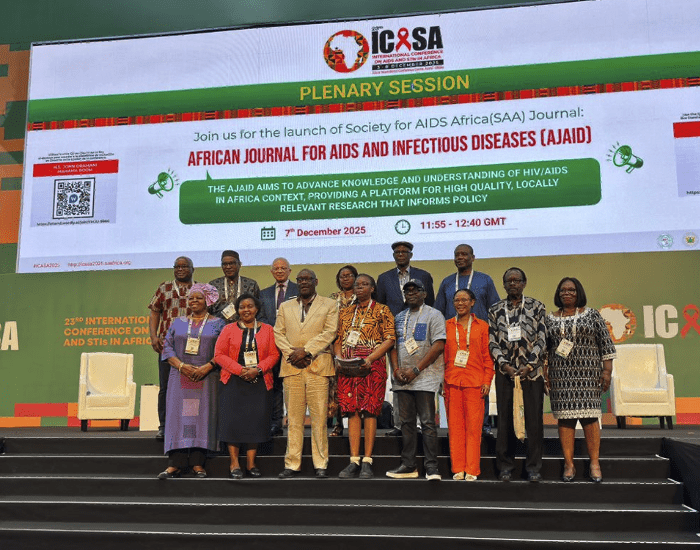
Bringing together some of Africa’s leading health leaders and experts: the AJAID editorial board and SAA board members and trustees at the launch event.
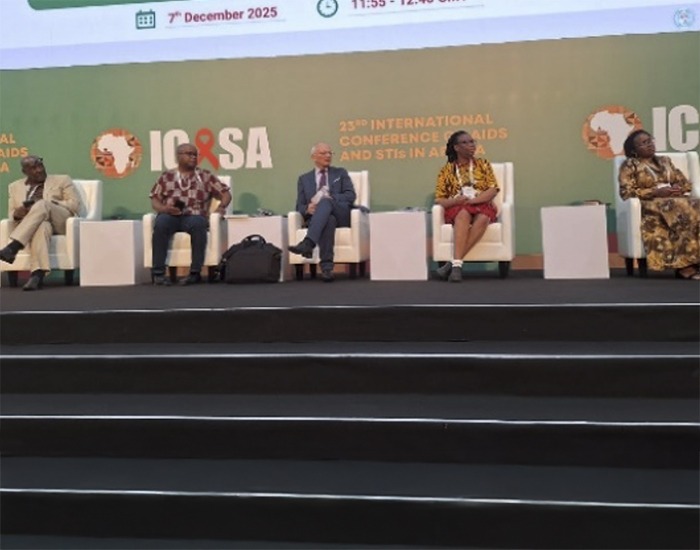
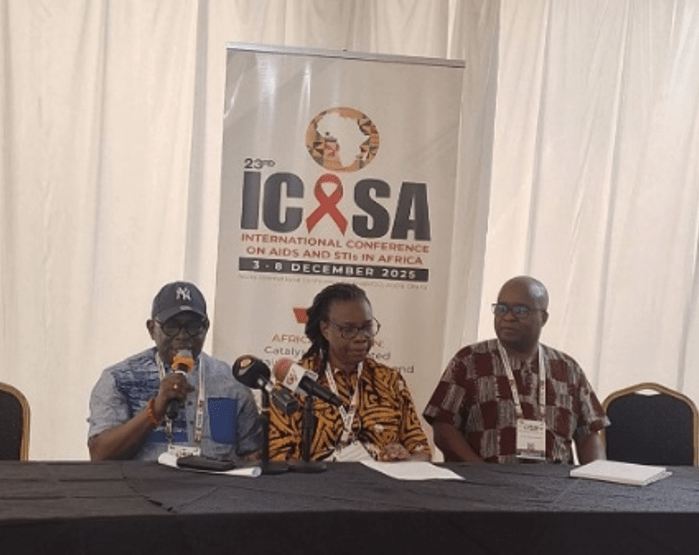
Ensuring that the research published in the AJAID is made accessible and relevant for the public will be key to the journal’s success. Speaking to journalists at the launch media conference are Luc Bodea (SAA coordinator and ICASA director), Prof Morenike Ukpong and Dr Munya Saruchera.