
On 10 December, eight more Africa Centre students from South Africa, Lesotho and Zimbabwe became part of our ever-growing MPhil alumni group of over 600 students. Our students’ research makes a critical contribution to shaping and refining the HIV/Aids response and optimising public health management.
A few of the graduates shared more about their MPhil journey with us, including what motivated them to enrol for the qualification and how they intend to use their newly acquired skills and knowledge.
Jean Mukoyi works as a district Aids coordinator and is passionate about contributing to the HIV/Aids response, particularly in the world of work and among key and vulnerable populations. Her decision to enrol in the MPhil programme was motivated by the need to generate local evidence that could improve uptake and retention of HIV prevention methods. Mukoyi’s research specifically explored the perceptions of young female sex workers in the Mutare district in Zimbabwe on pre-exposure prophylaxis (PrEP) retention. “I believe such evidence is important in shaping the successful adoption of newer prevention options, including the recently introduced injectable lenacapavir,” she said.
Mukoyi plans to apply her newly gained knowledge and skills directly in her role as an Aids coordinator by strengthening evidence-based decision-making and promoting more effective and responsive HIV prevention strategies.
For her MPhil study project, Portia Rito Khuvutlu investigated the factors that influence adherence to concurrent antiretroviral therapy and tuberculosis treatment among people living with HIV at a clinic in North West province. Her interest in the MPhil programme stemmed from the fact that her current role as project manager at the Aurum Institute requires strong technical expertise, evidence-based decision-making and the ability to influence programme design. “I wanted a deeper academic foundation to strengthen the quality of support I provide to the health programme and contribute to policy development for improved patient outcomes,” Khuvutlu said.
Her decision to enrol and her perseverance certainly paid off: “The MPhil has equipped me with the skills to integrate research, policy and practice. I plan to apply this knowledge to strengthen programme implementation and contribute to high-quality, impactful health interventions.”
Rets’epile Motiki’s MPhil journey started with a desire to strengthen her research skills and contribute to improved HIV/Aids outcomes in her home country of Lesotho. “My research focused on the contribution of village health workers [in the Quthing district] to retention activities, which remains a fundamental aspect of HIV management in rural communities,” Motiki said. “I hope the [research] findings will support policy adjustments and strengthen community-level HIV responses in the district and beyond.”
She also plans to use the qualification to expand her work in HIV programme evaluation, community health research and applied social studies. “I would recommend the programme to anyone who wants training that is both thorough and applicable to real-world problems,” Motiki said.
Dorah Mabeba’s research looked into the knowledge, attitude and practice of tuberculosis prevention among HIV-positive people at OR Tambo Clinic in Johannesburg. Inspired by her experience in health management and new skills, she plans to strengthen HIV programme planning, monitoring and evaluation, policy implementation and community-based service delivery through evidence-based practice.
Whereas the research conducted by the first four candidates had a strong focus on treatment adherence and retention, the other four students’ study projects involved a diverse set of topical factors that all affect the efficiency of HIV/Aids management efforts in different ways:
- Ayanda Dlamini conducted a qualitative study on the state of human resources management in the healthcare sector of Limpopo.
- Sello Roudah Mosesane explored the knowledge, attitudes and practices regarding HIV/Aids among adolescents in the uMgungudlovu district in KwaZulu-Natal.
- Letlhogonolo Shibambo performed a critical evaluation of how university students at a local historically disadvantaged university experience sexual health and HIV/Aids education services.
- Luthando Xhamlayo explored the effects of amaMpondo cultural practices and beliefs on HIV/Aids management in the Alfred Nzo district in the Eastern Cape.
The challenges and opportunities of studying while working full-time
Most of the students worked full-time jobs while completing the MPhil programme. While balancing work with academic responsibilities is certainly challenging, the graduates regard the perseverance and resilience gained by the experience as a positive, with many describing the journey as transformative.
Mukoyi recalls moments of physical exhaustion and frustration; however, “persistence, support from my supervisor and colleagues and a clear sense of purpose helped me to push through”. According to Khuvutlu, balancing academic deadlines with work pressure strengthened her capacity for critical thinking and finding balance between work and studying. For Motiki, careful planning and steady discipline helped her to manage the programme demands.
The structure of the programme, which is set up in a way that supports a full-time career, combined with the assistance of the Africa Centre team, played a big role in how students experienced and overcame the challenges. “There were moments when deadlines and field responsibilities competed for my attention,” Motiki said. “Even so, the programme offered enough structure and academic guidance to keep me on course.” For Mabeba, the strong academic foundation and institutional support is what enabled her to succeed despite the challenges she faced – which not only included her work and studies but also being a single mother.
Mukoyi summed it up well when she said that the journey showed her that it is possible to pursue academic excellence while serving the community full-time. She has a powerful message to prospective students: “Believe in your purpose and never underestimate what consistency and perseverance can achieve.”
Congratulations to all our graduates on successfully completing the programme. “We commend the students for their commitment, hard work and graduation despite the challenges of balancing studies, work and family, especially the women who also do more caregiving,” said Africa Centre director Munya Saruchera.
Every research project, whatever the area of focus and scale, makes a dent in the HIV/Aids response and brings us one step closer to eradicating the epidemic.
For more details about other Africa Centre MPhil research projects, visit the study projects page.
Interested in pursuing the MPhil in HIV/Aids Management qualification?
Find out more here.


According to Portia Rito Khuvutlu, her MPhil journey not only expanded her academic lens but also renewed her commitment to driving sustainable improvements in public health.

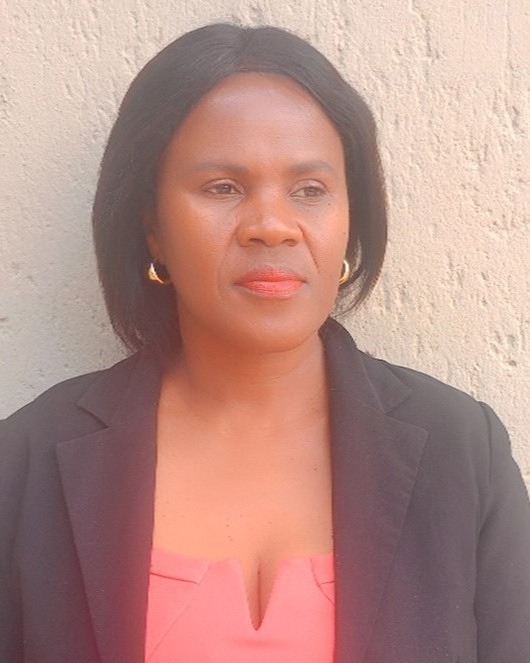
Rets’epile Motiki plans to use her MPhil qualification to expand her work in HIV programme evaluation, community health research and applied social studies.