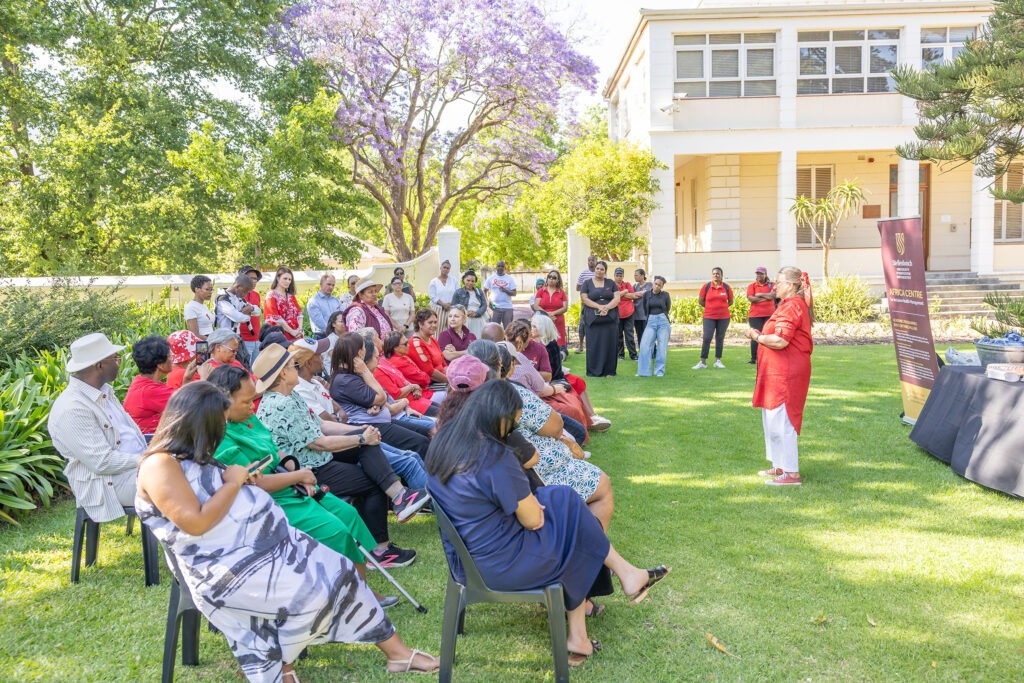
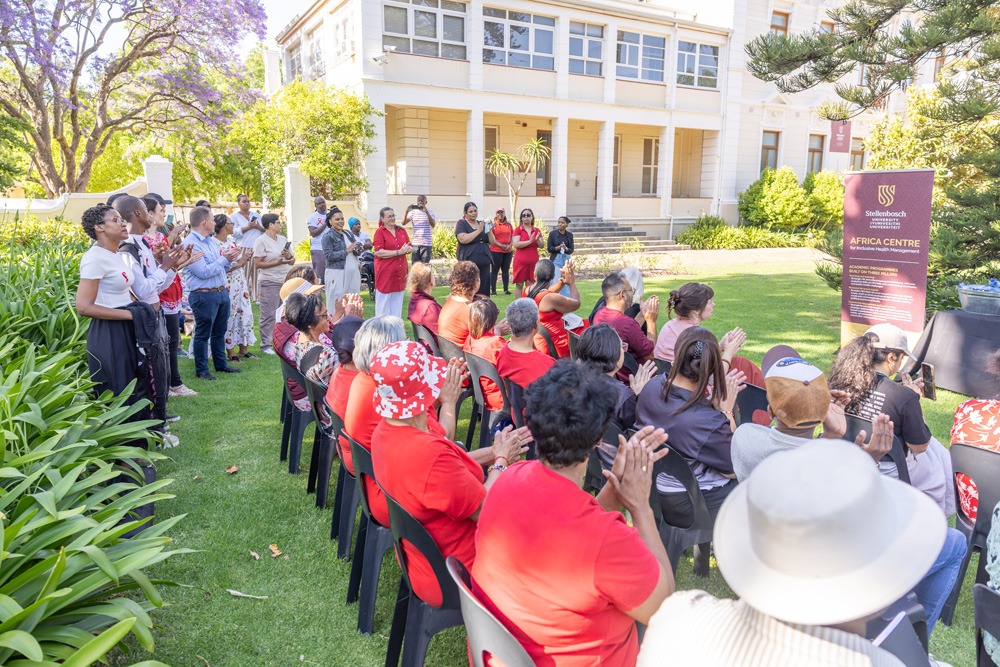
On 28 November, the Africa Centre for Inclusive Management hosted its first Roses on the River event at the Faculty of Theology at Stellenbosch University for World Aids Day, which is commemorated on 1 December each year. The event brought together community members and organisations to honour the lives lost due to Aids, celebrate the survivors and the gains made in containing the epidemic and renew the commitment to protecting these advances.
From statistics to faces and meaningful milestones
Rose on the River was launched in 2001 with the purpose of commemorating the lives of people who passed away due to Aids, including frontline workers. It brings home the facelessness of HIV/Aids statistics by providing an opportunity to not only reflect on the individuals lost to the epidemic but also on the victories, breakthroughs and personal experiences of those affected by the epidemic. The Africa Centre held the event in partnership with local community organisation atHeart, which has been the host for the past 20+ years.
A transformed response rooted in unity and cooperation
The Roses on the River event tied in well with this year’s World Aids Day theme: Overcoming disruption, transforming the Aids response. The theme highlights the challenges of funding cuts, which have had a severe impact on HIV/Aids services, as well as the resilience of communities working together to overcome such obstacles and persist in the battle against the epidemic, which is critical to a transformed HIV/Aids response. In addition to acknowledging the loss of life, it is also about recognising the stories of survival and scientific advances so that we can continue to build on these. Events like these reinforce the importance of unity and collaboration in driving the HIV/Aids response forward.
Community collaboration in action
The presence of local community organisations and members at the event showcased the solidarity among stakeholders. George Arrey, vice chair of the Stellenbosch Civil Advocacy Network (SCAN) and CEO of Health Promoters, opened the event. Health Promoters provides information and training in health and hygiene to prevent illness in the townships of Stellenbosch and beyond, where HIV remains a key risk factor.
Acknowledging that funding cuts hold the risk of reversing the hard-won gains made in the battle against HIV/Aids, Arrey highlighted that it is community workers, NGOs and youth activists that are keeping services alive and combating stigma. “The key priorities moving forward are to strengthen and diversify funding, invest in community-led systems, integrate services and support stigma-free environments,” he said, and added that resilience, innovation and sustained community partnership are critical to transforming the HIV/Aids response.
Following the opening, Lynette Rademeyer-Bosman from atHeart shared her experience of how the event has evolved over time – from the moment when the four founder women stood alone at the bridge, armed only with roses and a conviction in their hearts. “Coming to the bridge over the years, I have come to realise that it’s not about one thing or person – it’s the story that brings us to the river, the story of where we’ve come from, the story of resilience, compassion and heart.” She emphasised that every rose that is cast on the river is about celebrating the small victories as well as the large triumphs.
With atHeart closing its doors last year, the ceremony was handed over the Africa Centre, which has been a trusted service partner of atHeart since 2002. This provides the ideal opportunity for the centre to meet with local service and community partners around a central theme and to establish a signature HIV/Aids event. Rademeyer-Bosman passed the metaphorical baton to Africa Centre director Dr Munya Saruchera by handing him a rose.
In taking over responsibility for Roses on the River, Saruchera highlighted the strong symbolism connected to the event. “When one looks at roses, one looks at water. Water is used for so many things, like to clean and to heal. Then there are the rose petals, which are associated with memory and the fleeting nature of life in Western traditions. At the same time, there’s the bridge, representing the idea of reaching out and crossing over.”
Saruchera pointed out that the significance of the event as represented by these symbols emphasises the expectations the Africa Centre has to live up to in taking over responsibility for the event – a responsibility he takes very seriously. “We hope you will call us out if we’re not representing what this should be and growing it in a way that continues the community spirit this comes with.”
A new Africa Centre partner, HospiVision, which provides holistic pastoral-spiritual care and counselling in 11 public hospitals across Gauteng and the Western Cape, was also represented at the event. The Africa Centre and HospiVision will be co-hosting a conference on spirituality and health in 2026.
In light of the World Aids Day theme and focusing on inequality, Christél Kloppers, financial and marketing manager at HospiVision, spoke about how disruption hits the most vulnerable individuals and communities the hardest. Just like roses have both beauty and thorns, Kloppers highlighted that the ‘thorn’ in our sides is the gap between those who have and those who need: “Our duty is to bridge that gap for those who are hungry, sick or treated as strangers.”
This includes fighting the stigma that isolates marginalised people and communities. “We cannot treat a virus if we ignore the poverty that fuels it. It calls us to stand in the gap for those the world threatens to leave behind.”
Based on this philosophy, HospiVision follows a holistic approach to their pastoral-spiritual care and counselling. For example, at the De La Porte Oasis at Tshwane District Hospital, patients on antiretroviral therapy not only receive their medication; they also have the opportunity to partake in skills development programmes (e.g. sewing, baking and growing food), nourishing both body and spirit.
Giving a voice to the voiceless and hope for the future
Following the official addresses, anyone from the community who attended the event could share their thoughts and stories. These testimonies are truly the heart of the event: first-hand accounts of how the epidemic has impacted people’s lives, ignited resilience and fast-tracked solutions are a key driving force in maintaining momentum in the HIV/Aids response. Just like the flowers cast on the Eerste River make their way downstream, spreading colour and life, every word and action against HIV/Aids has a ripple effect.

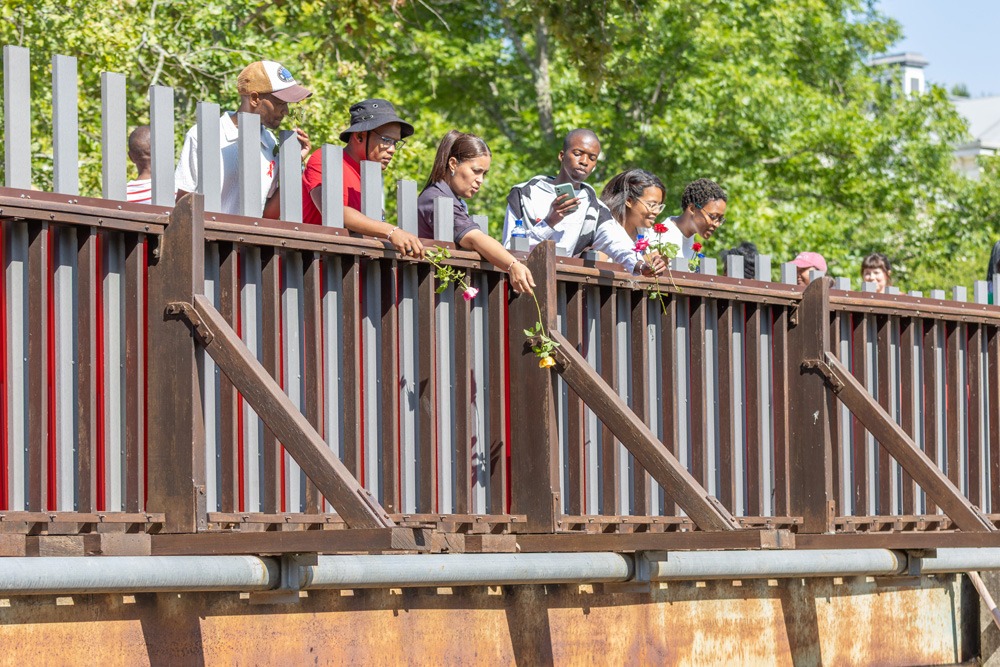
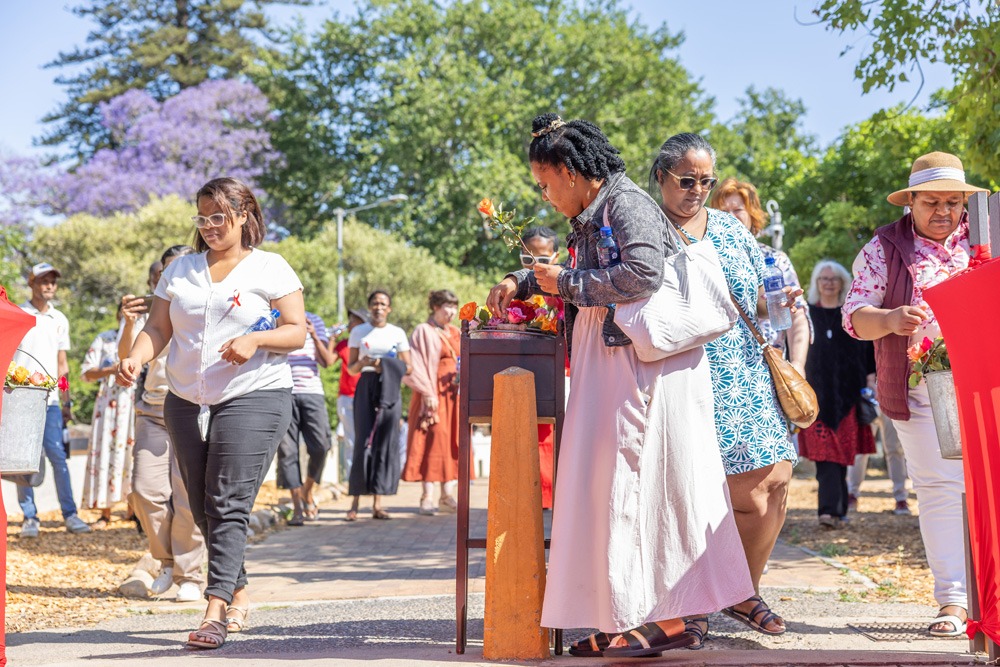
A time for reflection: attendees could spend as long as they needed to at the bridge over the Eerste River to remember those who passed away due to Aids and to consider the future.
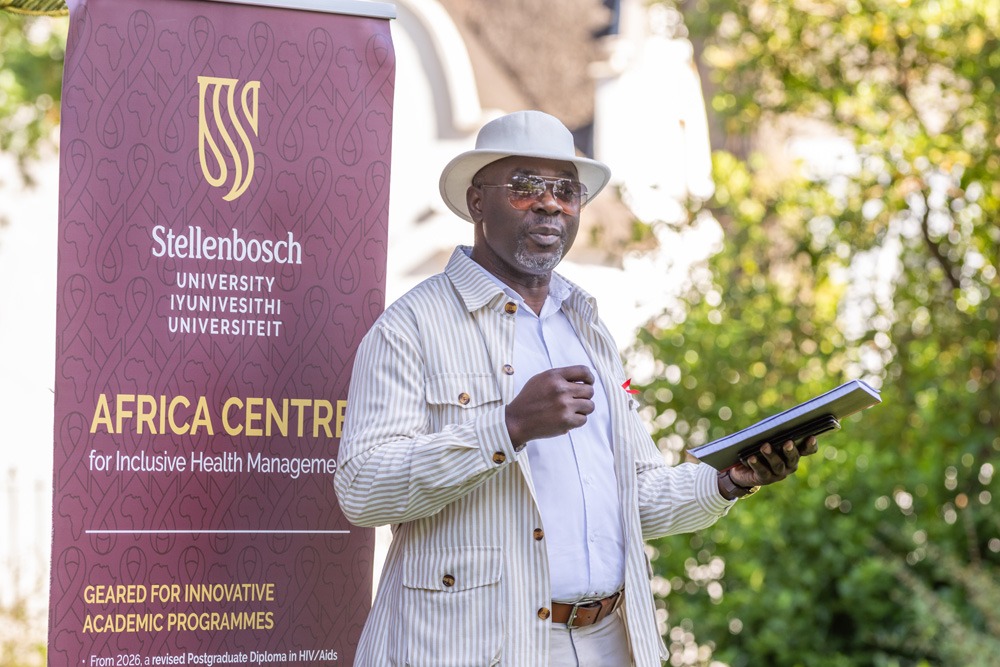

“How do we use the shocks [that threaten our progress] to strengthen and transform our HIV/Aids response?” George Arrey of the Stellenbosch Civil Advocacy Network (SCAN) and Health Promoters aptly captured the World Aids Day theme and the driving force of the way forward in his opening address.
Lynette Rademeyer-Bosman from atHeart, which has been hosting the Roses on the River event for more than 20 years, gave Africa Centre director Dr Munya Saruchera a rose as a symbolic gesture for handing over the event to the centre from 2026 onwards.
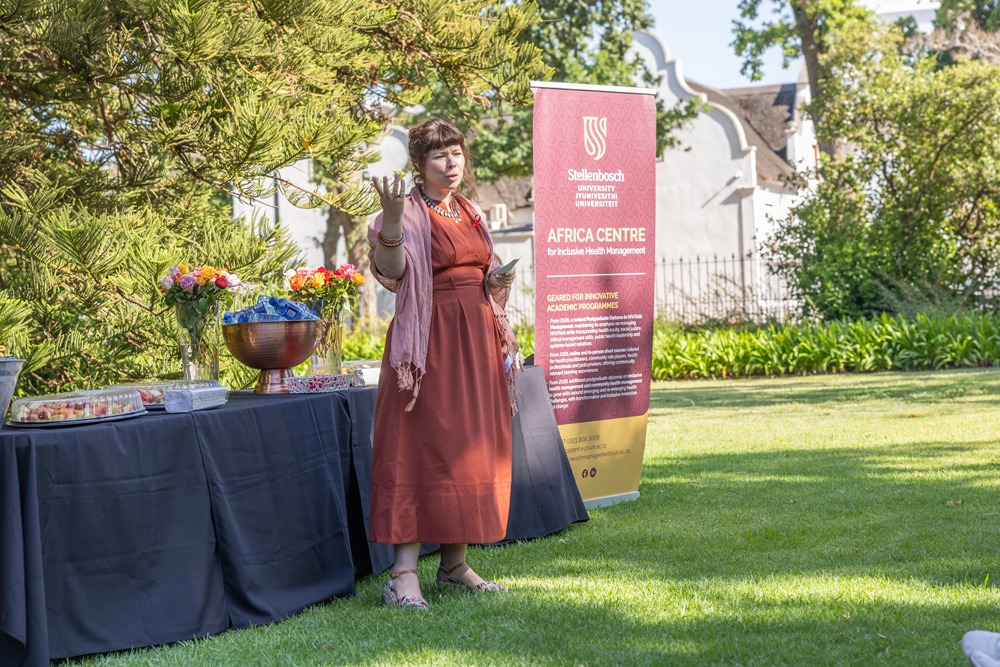
Christél Kloppers from HospiVision, a new Africa Centre partner, emphasised the importance of combating the stigma that isolates marginalised people and communities if we are to maintain progress in the battle against HIV/Aids.
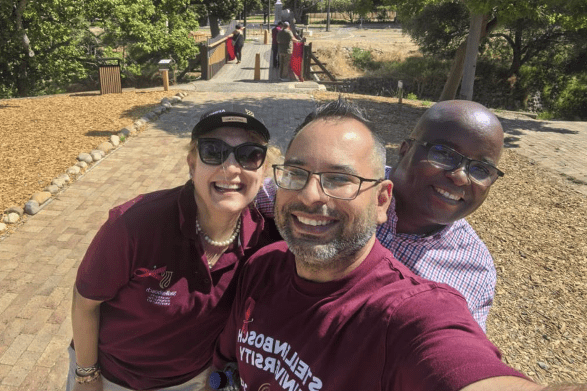
There’s always time for a selfie! Dr Kathy Grammer (senior director of Campus Health Services) and Chevaan Peters (manager of knowledge information systems and marketing at the Centre for the Advancement of Social Impact and Transformation) and Dr Munya Saruchera from the Africa Centre.
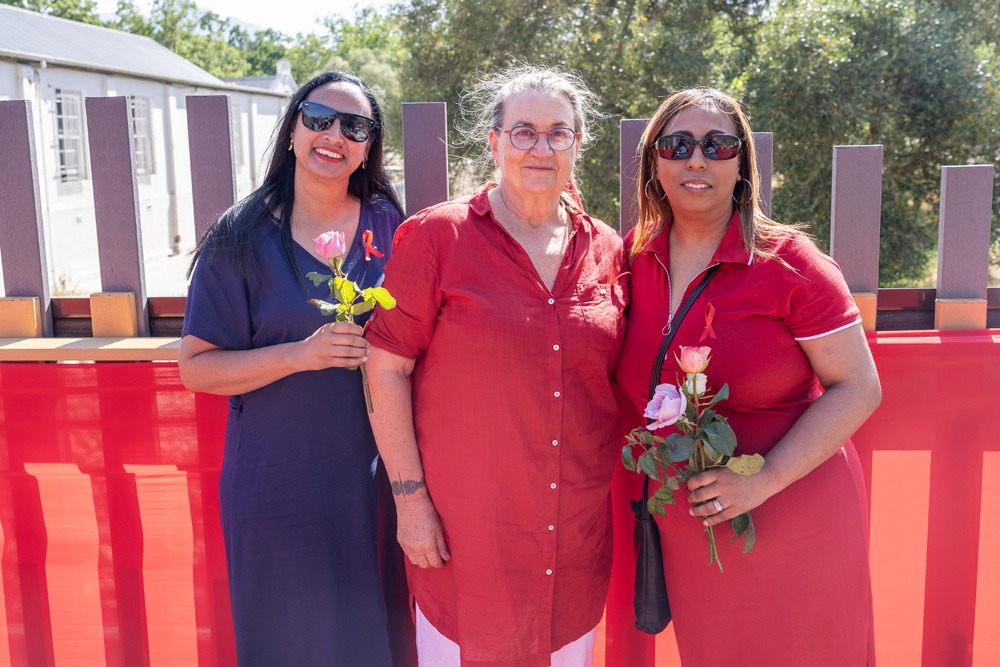
The Africa Centre and local community organisation atHeart, which closed its doors in 2024, have had a long and fruitful partnership. Here Yolande Barendse (left) and Bianca Jacobs (right) from the centre share a moment with Lynette Rademeyer-Bosman (middle) from atHeart for old times’ sake.
Meaning community collaboration will play a vital role in the future success of the HIV/Aids response – which is why it was truly heartening to see so many members of the Stellenbosch community come together at Roses on the River.